

 |
Testing of power equipment and energy installations |
Steam Boiler Testing
INWAT provides comprehensive operational, optimization, acceptance and guarantee measurements of steam boilers. Boiler testing, measurements and preparation of test reports are carried out in accordance with PN-EN 12952-15, PN-72/M-34128, DIN 1942, ASME PTC 4.1, ISO 5221, PN-98/M-34702, PN-89/M-34130/01, PN-Z-04030-7 and TRD 301.
The scope of services includes boiler testing and measurements to determine:
-
thermal and mass capacity of the boiler,
-
individual losses,
-
boiler efficiency (direct or indirect method),
-
parameters guaranteed by the manufacturer, overhaul contractor or modernization contractor,
For each heat exchange surface:
-
operating parameters,
-
thermal efficiency,
-
coefficients characterizing heat transfer processes,
-
flow resistance on the flue gas side and the heated medium side,
-
flue gas temperature distribution in the boiler along the flue gas flow path,
-
tightness of the boiler and flue gas ducts, including air heater tightness,
-
air distribution,
For pulverized fuel boilers:
-
pulverized fuel–air mixture distribution together with adjustment,
-
carrier air flow resistance along the path to each burner nozzle,
-
mill grinding performance,
-
burner settings and adjustment,
-
optimal boiler start-up and shutdown criteria,
-
air balance,
Emission measurements:
-
particulate emissions to the atmosphere,
-
gaseous emissions (i.e. CO, SO₂, SO₃, NOₓ, HCl, HF, Hg, NH₃) to the atmosphere using modern flue gas analyzers such as GASMET DX-4000 and HORIBA PG-350,
Additional measurements:
-
noise emitted by equipment and to the environment,
-
vibrations of equipment and structures,
-
efficiency of dust removal equipment,
-
insulation temperature (thermal imaging measurements),
-
properties of fuels and combustion residues.
We also perform sampling (including coal, slag, ash, gypsum) and their analysis in accredited laboratories.
We also carry out guarantee and operational measurements of flue gas denitrification systems (based on catalytic SCR and non-catalytic SNCR methods), as well as measurements of flue gas desulfurization (FGD) installations.
Conducting appropriate tests enables boiler operators to manage fuel and material consumption rationally and, in particular, allows for:
-
determination of the most economical boiler operating conditions,
-
safe and economical boiler shutdowns and start-ups,
-
extension of operating time (increase of remaining service life).
Such tests also enable informed decisions regarding boiler overhauls and modernization. Measurement results and documentation prepared by our specialists are used, among others, for settlements with NFOŚ and URE.
Steam and Gas Turbine Testing
We perform comprehensive measurements of steam and gas turbines, together with their auxiliary equipment. Measurements are carried out in accordance with applicable guidelines and standards (PN, ISO, ASME, API and DIN).
We conduct measurements for:
-
steam turbines according to PN-EN 60953-1, PN-EN 60953-2, PN-EN 60953-3, PTC-6, DIN 1943,
-
gas turbines according to ISO 2314, DIN 4341, PTC 22.
Our experience enables testing of all types and sizes of steam and gas turbines.
The scope of turbine testing services includes:
-
guarantee measurements of turbine technical indicators after overhauls, modernizations and deliveries,
-
acceptance testing of turbines for the needs of the Polish Power Grid (PSE),
-
measurements to determine operational performance indicators and characteristics,
-
determination of optimal turbine operating conditions,
-
beta coefficient (β) testing,
-
balance calculations of turbine systems,
-
dynamic condition measurements,
-
noise measurements,
-
testing to determine the feasibility and scope of changes in turbine operating conditions,
-
assessment of technical condition and remaining operational lifetime,
-
determination of optimal turbine unit start-up criteria,
-
periodic diagnostic testing of main equipment and installations,
-
between-overhaul measurement service of turbine units,
-
rationalization of steam turbine operation.
Example scope of turbine measurements includes determination at various loads of:
-
efficiency of individual turbine sections,
-
efficiency and heat consumption indicators for the entire turbine,
-
pressure and temperature distribution of working media at characteristic points of the thermal system as a function of steam load,
-
analysis of load and parameters of individual regenerative heat exchangers,
-
assessment of condenser tightness and performance quality,
-
assessment of the cooling system and parameters of natural draft and fan cooling towers,
-
assessment of flow path performance.
It should be emphasized that turbine unit testing is not treated as routine measurement; results are most often extended with data useful for operation and maintenance. Conducting appropriate tests enables rational operation of turbine units and, in particular, allows for:
-
determination of the most economical operating conditions,
-
safe and economical shutdowns and start-ups,
-
extension of operating time (increase of service life).
Testing also supports informed decisions regarding overhauls and potential modernization of turbine units.
Testing of Power Units, Heating Plants, CHP Plants and Power Plants
Since the beginning of its activity, INWAT has been performing comprehensive testing of heating plants, combined heat and power plants and power plants. These include acceptance, guarantee and operational measurements.
We perform measurements of:
-
coal-fired units,
-
biomass-fired units,
-
biogas plants,
-
waste-to-energy units,
-
gas-fired units,
-
combined-cycle units,
-
units operating in the ORC (Organic Rankine Cycle) system.
Comprehensive measurements of power installations are performed for contract settlements and for institutions such as NFOŚ, URE and PSE, including measurements of unit operational flexibility in compliance with ENTSO-E requirements. Unit performance indicators are also measured in accordance with PTC 46.
The scope of power unit testing includes, among others, measurements of the following parameters:
-
maximum gross/net capacity,
-
achievable gross/net capacity,
-
minimum stable gross/net capacity,
-
auxiliary power consumption and auxiliary power index with turbine-driven pump,
-
auxiliary power consumption and auxiliary power index without turbine-driven pump,
-
electrical energy consumption by main unit equipment (pumps, fans, mills, electrostatic precipitators and others),
-
specific chemical energy consumption of fuel gross (SCEC/G) and net (SCEC/N),
-
energy characteristics and relative increments (ERO),
-
parameterized energy losses for operational control purposes (with indication of occurrence locations) depending on:
-
load level,
-
cooling water temperature,
-
live and reheat steam temperature,
-
live and reheat steam pressure and pressure drop,
-
feedwater temperature,
-
spray water quantity to live and reheat steam,
-
flue gas temperature,
-
air temperature supplied to the boiler,
-
O₂ content in flue gas,
-
combustible content in slag and ash,
-
coal quality,
-
-
gross and net unit efficiency,
-
unit capacity and efficiency during operation without turbine regeneration,
-
unit consumption of:
-
heat,
-
steam,
-
coal,
-
make-up water,
-
cooling water,
-
-
limit start-up times from various thermal states,
-
permissible unit load change rates within ranges of 40–80%, 80–90% and 90–100% of rated capacity,
-
start-up losses and costs from various thermal states,
-
quantities and parameters of discharged wastewater and waste,
-
emission levels of pollutants to the atmosphere during combustion of the primary fuel,
-
noise levels generated by unit equipment and in the surrounding environment.
Auxiliary Technological Installations
As part of power unit installation measurements, we perform testing of technological systems such as:
-
fuel handling and feeding systems,
-
coal mills,
-
start-up oil systems,
-
combustion waste removal systems (ash, slag and gypsum slurry),
-
water treatment plants,
-
cooling water systems including pump stations and cooling towers,
-
compressed air systems,
-
flue gas desulfurization installations,
-
gypsum dewatering installations,
-
gypsum storage systems,
-
wastewater treatment systems from gypsum dewatering.
Fan and Compressor Testing
We conduct testing of various types and sizes of flow fans and compressors, as well as cooperating installations, at the installation site.
Testing of fans, compressors and installations is carried out in accordance with required standards and client guidelines. The scope of services includes:
-
measurements and determination of flow-efficiency characteristics with technical assessment of operating quality,
-
power consumption characteristic measurements,
-
installation resistance measurements,
-
dynamic condition diagnostics,
-
noise measurements.
Conducting appropriate tests enables rational operation of fans and compressors and supports decisions regarding overhaul or modernization.
Pump and Pumping System Testing
We conduct operational and guarantee testing of various types and sizes of flow pumps, couplings and hydrodynamic transmissions, as well as cooperating pumping systems, at the installation site. The scope includes:
-
boiler feedwater pumps,
-
condensate pumps,
-
cooling water pumps,
-
distillate pumps,
-
network pumps,
-
drainage pumps.
The experience gained enables design, overhaul and modernization works of centrifugal pumps and cooperating installations. Pump and pumping system testing is carried out in accordance with national and international standards and client guidelines.
The scope of pump and pumping system testing includes:
-
determination of operating characteristics:
-
power consumption,
-
pump efficiency,
-
head,
-
capacity,
-
net positive suction head (NPSH) margin,
-
-
pumping system resistance measurements,
-
pumping system optimization analysis to minimize energy demand,
-
testing of control characteristics of hydrodynamic transmissions,
-
diagnostic testing,
-
noise measurements.
Conducting appropriate tests enables rational and energy-efficient operation of pumps and pumping systems and supports decisions regarding overhaul or modernization.
Steam Turbine Control System Testing
We perform testing of mechanical-hydraulic control systems, guarantee measurements of turbine control systems equipped with electro-hydraulic governors, and ARCM acceptance measurements. We hold a certificate issued by the Polish Power Grid (PSE) authorizing us to perform measurements for PSE purposes.
Technical Condition Assessment
Technical condition is assessed based on test results aimed at:
In the case of pre-overhaul turbine testing:
-
determination of discrepancies between actual control settings and documentation settings,
-
determination of control system deadband (UAR),
-
preparation of guidelines for control system overhaul.
In the case of post-overhaul turbine testing:
-
assessment of correctness of overhaul works – compliance of actual control settings with design assumptions (points of control valve operation, safety governor settings, etc.).
ARCM acceptance measurements:
-
measurements of automatic steam pressure and unit power control systems adapted for ARCM operation with Y0 (Y0i), Y1 (Y1i) and Y1S signals, including recording of selected parameters such as:
-
unit set power,
-
actual unit power,
-
live steam pressure and pressure deviation,
-
total fuel flow to the boiler,
-
live steam temperature,
-
control valve position,
-
oxygen content in flue gas.
-
Primary control testing:
-
verification of compliance with KDM requirements regarding:
-
primary control regulation range,
-
deadband,
-
droop,
-
dynamic response.
-
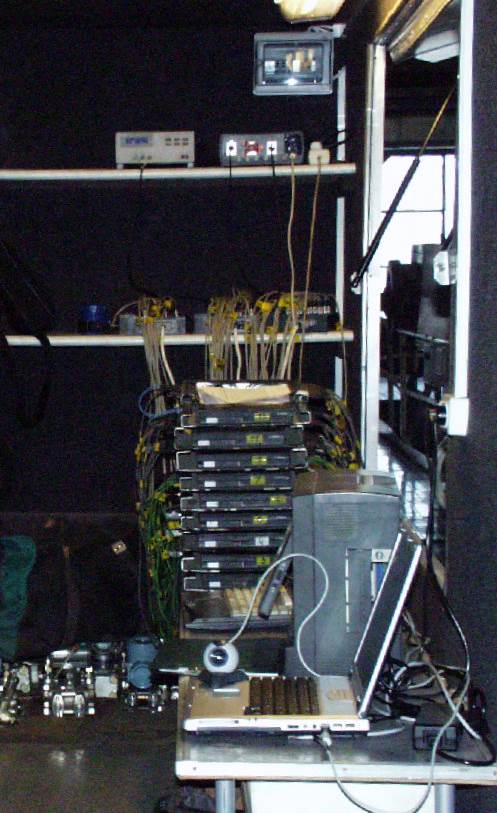
Test programs are specified and adapted to client requirements based on mutual arrangements. The applied measurement instrumentation enables measurements with non-linearity ≤ 0.25% and multi-channel recording of fast-changing signals at frequencies of 330 kHz for one channel up to 5000 Hz for 64 channels.